Skip to content
FDA infant-formula industry letter

FDA's infant-formula letter: 6 supplier-oversight checks

Published 2026-07-19 · Updated 2026-07-19

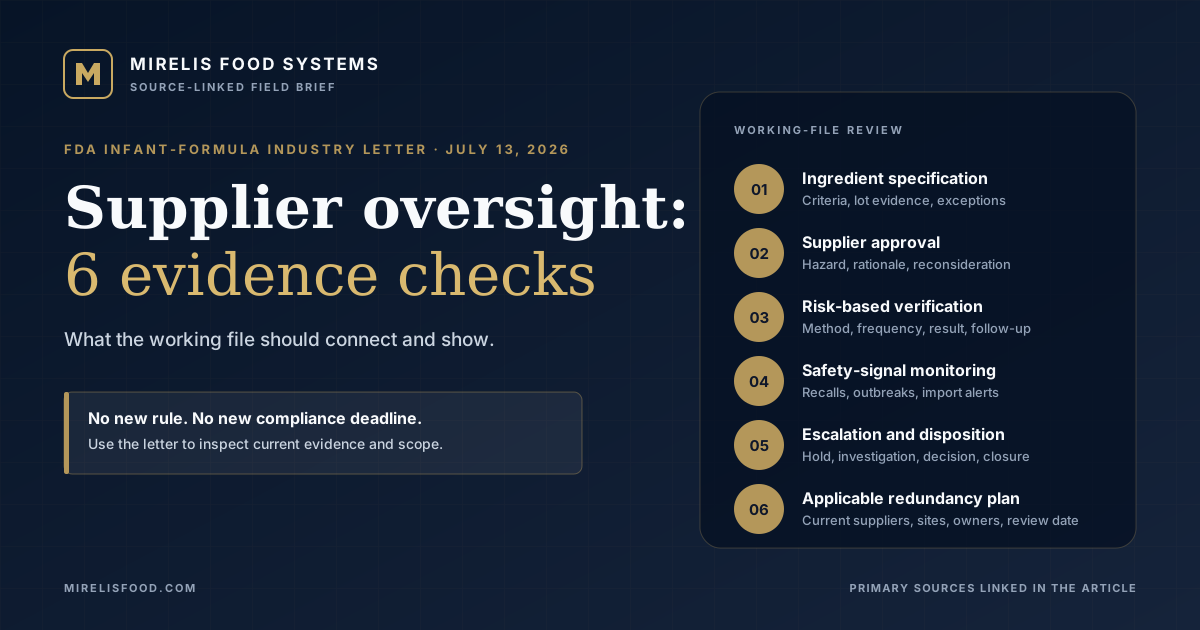
FDA's July 13 letter does not announce a new regulation or compliance deadline. It gives infant-formula quality and regulatory teams a timely reason to inspect the evidence behind ingredient and supplier decisions.

Six supplier-oversight checks: specification, approval, verification, monitoring, escalation, and applicable redundancy planning

FDA says manufacturers should understand where ingredients come from, how they are produced, what risks they may carry, and whether those risks are controlled. The agency also recommends monitoring applicable recalls, outbreak investigations, and import alerts, then responding promptly when a concern appears.

The practical review question

Can the working file connect the ingredient hazard, supplier decision, verification activity, current safety signals, and response?

Primary sources: FDA constituent update and FDA industry letter, retrieved 2026-07-19.

Check the scope first

The authorities discussed in the letter do not apply identically to every food or facility.

21 CFR Part 106

The production and ingredient controls cited here are specific to infant formula.

21 CFR Part 117, Subpart G

The supply-chain program is conditional. It applies when a receiving facility identifies a hazard requiring a supply-chain-applied control, subject to the subpart's provisions and exceptions.

21 U.S.C. 350m

The redundancy-plan requirement applies to manufacturers of critical food, not every food facility.

Other food teams can use the questions below as a supplier-quality case study, but should confirm the requirements that apply to their own products and facilities.

Six checks for the working file

Each check should point to current evidence, an owner, and a review or completion date.

  1. 01 · Ingredient specification

    Is the approved specification current?

    For infant formula, 21 CFR 106.40 requires written specifications and procedures for ingredients, containers, and closures. If a specification is not met, the rule calls for documented review and a material disposition decision.

    Open:

    • The current specification and revision history
    • Lot identification and acceptance evidence
    • Test results, exceptions, holds, and disposition records

    21 CFR 106.40, retrieved 2026-07-19.

  2. 02 · Supplier approval

    Can the file explain why the supplier is approved?

    When Subpart G applies, the decision considers the hazard analysis, who controls the hazard, supplier performance, relevant FDA compliance information, and other appropriate factors. Approval must be documented.

    Answer:

    • What ingredient and hazard were evaluated?
    • What evidence supported approval?
    • What would cause the approval to be reconsidered?

    21 CFR 117.410 and 117.420, retrieved 2026-07-19.

  3. 03 · Verification

    Does the verification activity match the risk?

    Part 117 identifies onsite audits, sampling and testing, review of relevant food-safety records, and other appropriate risk-based activities. The choice and frequency depend on the hazard, control, and supplier performance.

    Show:

    • Which activity was selected and why
    • When it was completed and what it found
    • Who reviewed the result and what remains open

    21 CFR 117.410, retrieved 2026-07-19.

  4. 04 · Safety-signal monitoring

    Who monitors new safety information?

    FDA recommends that infant-formula manufacturers and supply-chain partners stay current on applicable recalls, outbreak investigations, and import alerts.

    Define:

    • Who reviews each source and how often
    • How an alert reaches the product or supplier owner
    • What reopens the file and how the decision is recorded

    Material supplier, process, or ingredient-source changes are a Mirelis operating prompt, not a separate requirement stated in FDA's letter.

  5. 05 · Escalation and disposition

    Is the response path clear?

    FDA says manufacturers should act promptly when a contaminated ingredient or supplier concern is identified. For infant formula, 21 CFR 106.40 includes documented-review, quarantine, and disposition provisions.

    Define:

    • What triggers a hold or investigation
    • Who evaluates affected ingredients, products, and lots
    • Who can reject, recondition, approve, or release material

    Do not apply the infant-formula provisions universally outside their scope.

  6. 06 · Applicable redundancy planning

    Is the redundancy plan current when required?

    21 U.S.C. 350m requires each manufacturer of a critical food to maintain and implement, as appropriate, a redundancy risk management plan for each establishment where that food is manufactured.

    Confirm:

    • The plan reflects current suppliers and production sites
    • Supply risks and possible mitigations have owners
    • The plan has a review date and change trigger

    21 U.S.C. 350m, retrieved 2026-07-19.
Files worth opening this week

  1. Current ingredient specification and revision history
  2. Ingredient hazard analysis
  3. Supplier approval record and supporting rationale
  4. Most recent verification evidence and follow-up
  5. Lot-acceptance, testing, and exception records
  6. Recall, outbreak, and import-alert monitoring records
  7. Recent hold, investigation, and disposition records
  8. The applicable redundancy risk management plan

These are Mirelis review prompts synthesized from the cited sources. They are not an FDA-issued checklist.

Need a focused review of supplier-quality files?

Mirelis can review current supplier approval, verification, escalation, and readiness documents, identify missing or outdated evidence, and return a prioritized action list under written scope.

Discuss QMS support

This article provides general information, not legal advice. Check current source text and product- and facility-specific facts before acting.

© 2026 Mirelis Food Systems, LLC. All rights reserved.